Is Vibe Coding Right for My Child? A Grade-by-Grade Guide (K–12)
- 3 February 2026
- Published by tutree
- STEM.org Accredited™ Partner

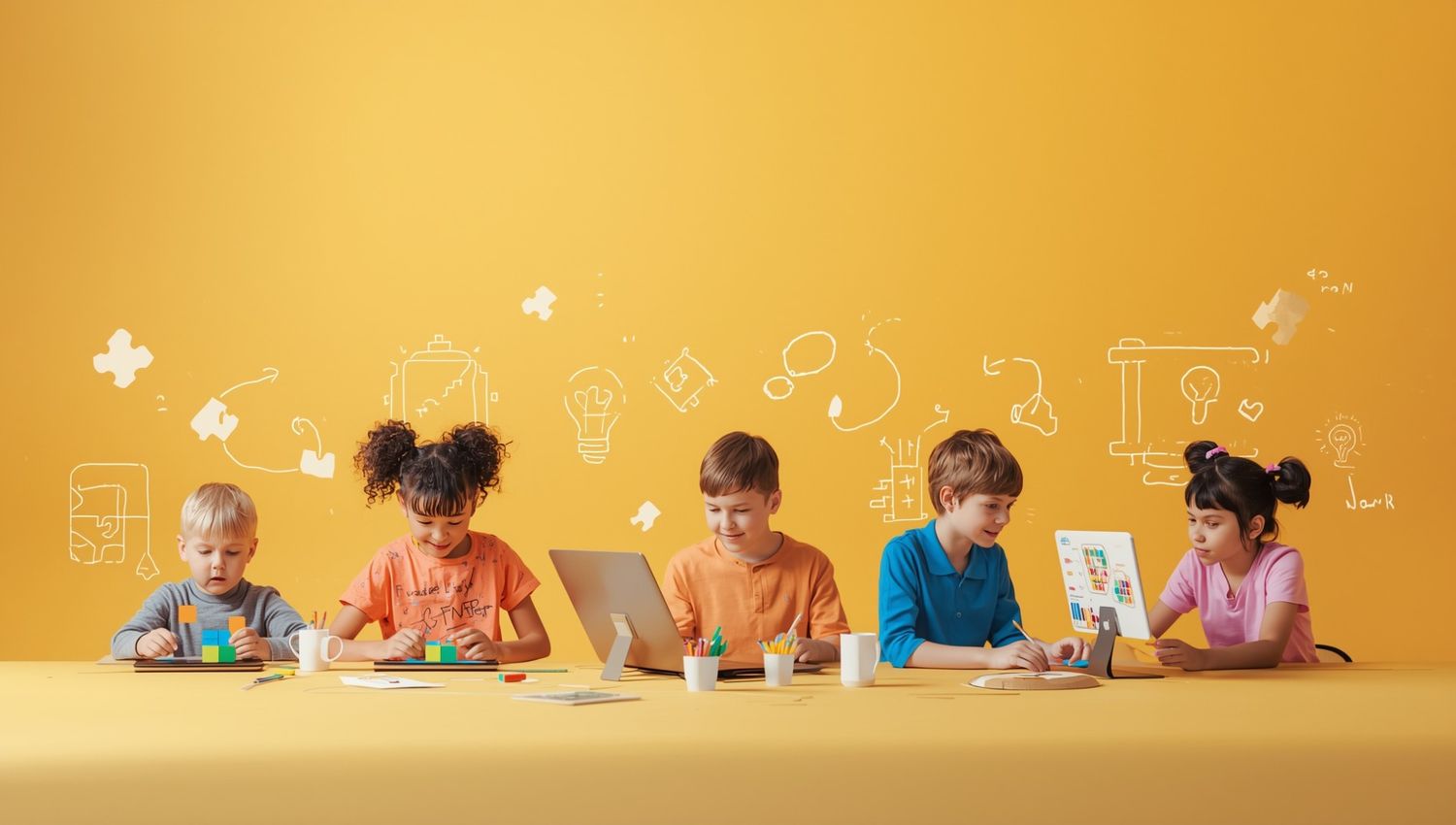
Parents often ask us when their children should start learning technical skills. It is a valid question because the world of technology feels vast and sometimes overwhelming. You might wonder if your six-year-old is too young or if your teenager has already missed the boat. The truth is that there is no single perfect age to begin this journey. The right time depends entirely on your child and their unique readiness.
Every student develops differently. Some children are drawn to puzzles and patterns before they can read fluently. Others might develop an interest in how video games work once they reach middle school. This is where vibe coding becomes such a valuable tool for families. It offers a flexible and creative entry point that adapts to where your child is right now rather than forcing them into a rigid curriculum.
If you are trying to navigate the many coding classes for kids available today, this guide is for you. We will break down how vibe coding fits into every stage of development from Kindergarten through Grade 12. Our goal is to help you feel confident about your choices so you can support your child’s learning journey without any unnecessary pressure or confusion.
What Is Vibe Coding?
Before we look at specific grade levels, we should clarify what vibe coding actually is. In simple terms, it is a beginner-friendly approach that focuses on visual learning and experimentation. Instead of typing out complex lines of text-based code, students use colorful blocks and visual elements to build programs.
This method allows children to see the immediate results of their work. They can drag and drop commands to make a character move, create a sound, or solve a puzzle. The focus is on understanding the logic behind the technology rather than memorizing syntax or grammar. Vibe coding encourages students to learn through building. It removes the fear of making syntax errors and replaces it with the joy of creation. This makes it an ideal starting point for learners of all ages who have no prior experience.
Kindergarten to Grade 2: The Playful Explorer
For the youngest learners in Kindergarten through Grade 2, education is all about play and discovery. At this stage, children are still developing their reading and fine motor skills. Vibe coding respects these developmental milestones by using symbols and colors instead of heavy text.
In these early years, the goal was not to build complex software. The goal is to establish a foundational understanding of cause and effect. A child might learn that placing a "forward" arrow block next to a "jump" block makes their digital character perform those actions in order. This introduces the concept of sequencing.
Online coding classes for kids in this age group are designed to feel like games. They nurture curiosity. When a child sees that their decisions control the outcome on the screen, they build confidence. They learn that they can be creators of technology rather than just passive consumers of it.
Grades 3 to 5: The Creative Builder
As children move into Grades 3 through 5, their cognitive abilities expand significantly. They can handle multiple steps and start to predict outcomes more accurately. This is the sweet spot where vibe coding transitions from simple exploration to creative construction.
Students in this age range love to express themselves. Vibe coding gives them the tools to create short animations, interactive stories, or simple games. They begin to understand patterns and loops, which are core concepts in computer science. For example, instead of telling a character to walk four times, they learn to use a "repeat" command.
This stage is crucial for developing persistence. When a project does not work the way they imagined, they learn to debug their logic. They practice problem-solving in a safe environment where mistakes are just part of the learning process.
Grades 6 to 8: The Logical Thinker
Middle school is a time of significant transition. Students become capable of more abstract thinking and logical reasoning. This makes Grades 6 through 8 an excellent time to introduce coding classes for middle schoolers that utilize vibe coding principles.
At this level, students can build more sophisticated projects. They might design a game with scorekeeping, levels, and conditional rules. They learn to ask "if this happens, then what happens?" This reinforces critical thinking skills that apply to math, science, and general decision-making.
For middle schoolers who are new to programming, vibe coding serves as a bridge. It allows them to grasp complex logic without getting frustrated by typos in text code. It keeps the focus on the "why" and "how" of problem-solving. This builds a strong conceptual foundation that will serve them well if they decide to pursue text-based languages later on.
Grades 9 to 10: The Structured Creator
High school brings a new level of academic structure. In Grades 9 and 10, students are often thinking about their future interests and potential career paths. Vibe coding remains relevant here because it allows teenagers to engage with STEM concepts in a way that feels approachable.
For a student who has never coded before, starting with a complex language like Python or Java can be intimidating. Vibe coding offers a welcoming entry point. It allows high schoolers to produce functional projects quickly. They can focus on the architecture of their programs.
This age group benefits from seeing the bigger picture. They learn how different parts of a program interact. It supports their development in subjects like physics and algebra by making abstract concepts visible and tangible. It validates their ability to master new technical skills.
Grades 11 to 12: The Confident Learner
By Grades 11 and 12, students are preparing for life beyond high school. You might think it is too late to start, but that is a misconception. A coding class for teens in their final years of school can be incredibly empowering.
For these students, vibe coding is about reinforcement and confidence. It is not necessarily about becoming a professional programmer overnight. It is about proving to themselves that they can learn a new digital skill. This is valuable for any career path, whether they plan to study the arts, business, or sciences.
Creative coding projects allow older teens to decompress while keeping their minds active. It serves as a mental gymnasium where they can exercise logic and creativity simultaneously. It ensures they leave school feeling capable and technologically literate.
How Parents Can Decide if Their Child Is Ready
Determining readiness is less about checking a birth date and more about observing your child’s interests. Here are a few signs that your child might be ready to try vibe coding:
-
Interest Level: Do they ask how their favorite apps or video games are made?
-
Comfort with Screens: Can they use a mouse or touchscreen to navigate basic menus?
-
Attention Span: Can they focus on a puzzle or building activity for twenty to thirty minutes?
-
Curiosity and Creativity: Do they enjoy creating stories, drawing, or building with physical blocks?
If you answered yes to most of these, they are likely ready to explore.
How Online Support Helps Across Grades
Regardless of your child's grade, having the right support makes all the difference. Learning entirely on their own can sometimes lead to frustration when they hit a roadblock. This is where online coding classes for kids with live guidance become essential.
At Tutree, we believe in the power of one-on-one interaction. A live tutor can adapt the lesson to your child’s specific pacing. If a second grader needs more time on sequencing, the tutor slows down. If a tenth grader grasps the logic quickly, the tutor challenges them to expand their project.
This personalized attention ensures that learning remains engaging. It prevents the boredom that comes from moving too slow and the anxiety that comes from moving too fast.
Conclusion
The journey into coding does not have a single starting line. Whether your child is in Kindergarten or Grade 12, there is a place for them to start learning. Vibe coding offers a flexible, forgiving, and fun way to build essential skills like logic and problem-solving.
Remember that the goal is not to rush them into becoming software engineers. The goal is to open a door to new ways of thinking. By choosing a path that matches their current stage of life, you set them up for a positive and rewarding experience.
If you are curious about how this would look for your child, we are here to help. At Tutree, our tutors are ready to guide your student through their first steps in a way that builds lasting confidence.
Related Articles
AI coding agents are changing how software is built, but what does this mean for students learning to code? Explore how coding education may evolve in 2027, the role of AI agents, and why programming fundamentals, problem-solving, creativity, and responsible AI use will remain essential for the next generation of builders.
AI tools like ChatGPT and GitHub Copilot are changing how code gets written — but they haven't made coding obsolete. In fact, coding skills are more valuable than ever. This guide helps parents understand why children should still learn programming, what skills truly matter in the AI era, and how starting early gives kids a lifelong advantage in any career they choose.
Vibe coding strengthens core math skills by reinforcing logic, patterns, and structured problem solving through hands-on programming. By applying math concepts in real projects, students build confidence, improve reasoning, and develop academic skills that support long-term success across subjects.
